
Makeup Artist Salary: How Much Do Makeup Artists Really Make in 2026?
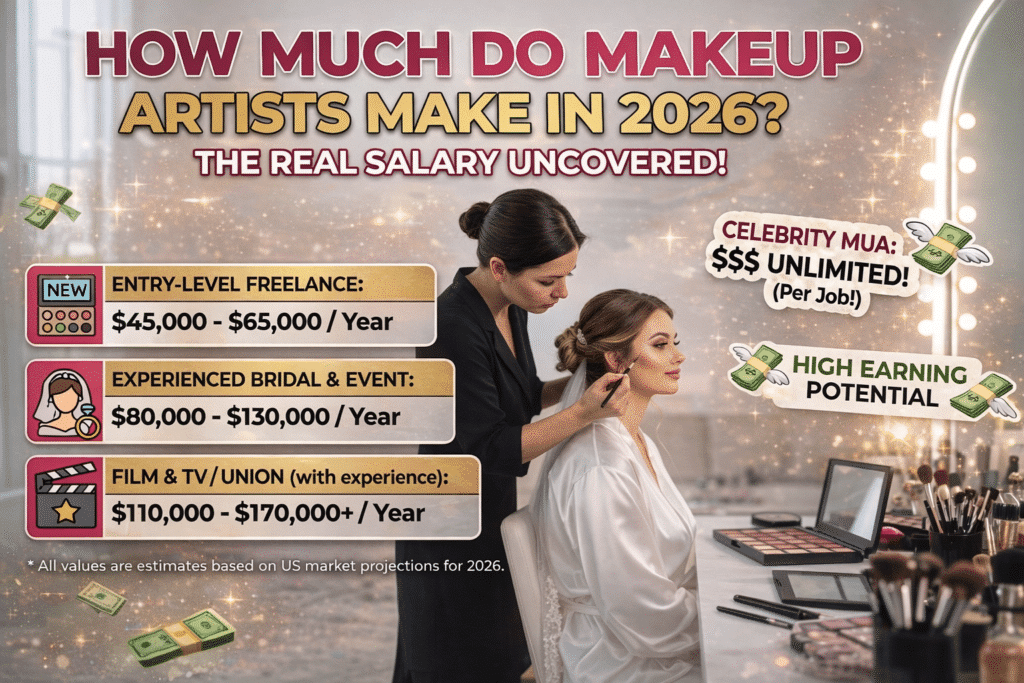
If you are thinking about becoming a makeup artist, one of the first questions you probably have is simple: how much do makeup artists make in 2026?
The beauty industry has undergone a massive transformation over the last few years. While social media has made the profession more visible than ever, it has also made the market more competitive. To succeed today, you need more than just a brush set; you need a deep understanding of the business, a defined niche, and a clear grasp of your earning potential across different sectors of the industry. Knowing how to become a pro makeup artist is the first step toward reaching these income goals.
The answer to the “how much” question depends on your niche, experience, location, portfolio, and how you position yourself in the beauty industry. A beginner artist working in retail or assisting other artists will usually earn much less than an experienced bridal makeup artist, celebrity makeup artist, or film and TV professional with a strong portfolio and repeat clients.
Quick Facts: 2026 Makeup Artist Salary Overview
National Average: $50,000 – $61,511 per year.
Hourly Rates: $25 – $60+ (Freelance).
Top 10% Earners: $134,740+ (Theatrical & Performance).
Entry-Level Range: $20,000 – $35,000.
High-End Potential: $100,000+ (Luxury Bridal, Film, or Business Owners).
Key Takeaways
National Average: The average makeup artist salary in the U.S. sits around $50,000–$61,511 per year, with hourly rates commonly ranging from $25 to $60+ for freelancers.
High-End Niche: Bureau of Labor Statistics (BLS) data shows theatrical and performance makeup artists in top markets like New York can earn a mean of $134,740 annually—though this represents a small, highly competitive niche in film and theater.
Income Variance: Pay varies most by specialization (bridal, SFX, retail), location (California and New York vs. smaller markets), and employment type (self-employed vs. W-2 employee).
Growth Potential: Year 1 earnings typically range from $20,000–$35,000; established full-time artists often reach $40,000–$80,000; six figures is achievable through high-end bridal, film work, or business ownership.
What Does a Makeup Artist Do (and How That Affects Pay)?
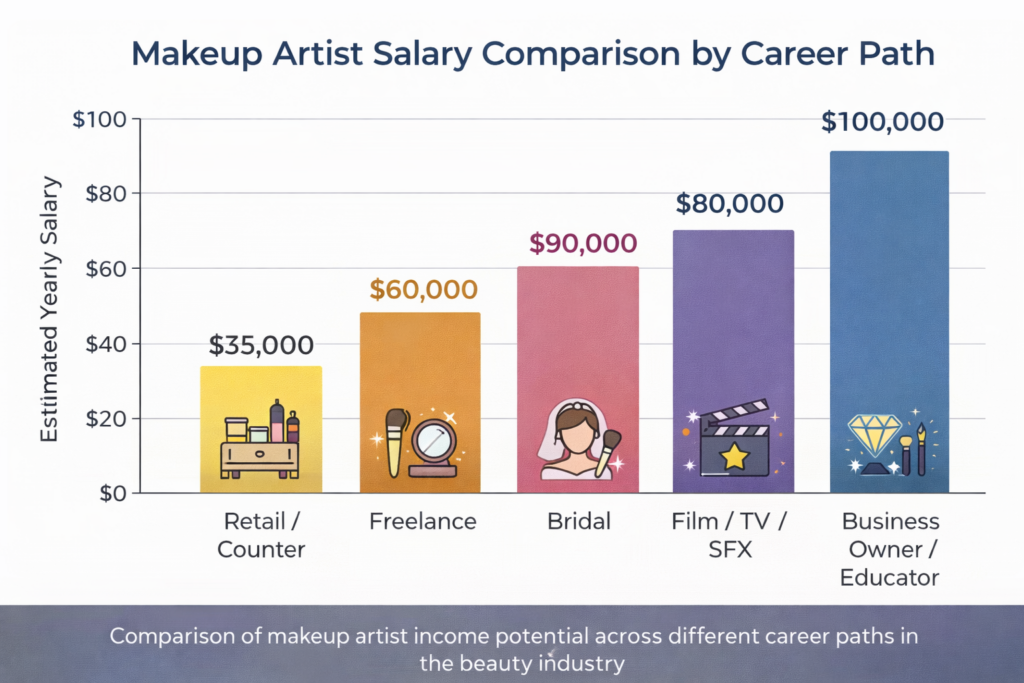
The job title “makeup artist” covers everything from salon counter associates to SFX specialists on major film sets. Each path carries different earning potential because the level of skill, responsibility, and “stakes” varies.
Core tasks include applying cosmetics, skin prep, color matching, contouring, corrective work, and maintaining hygiene standards. However, the context of these tasks changes everything:
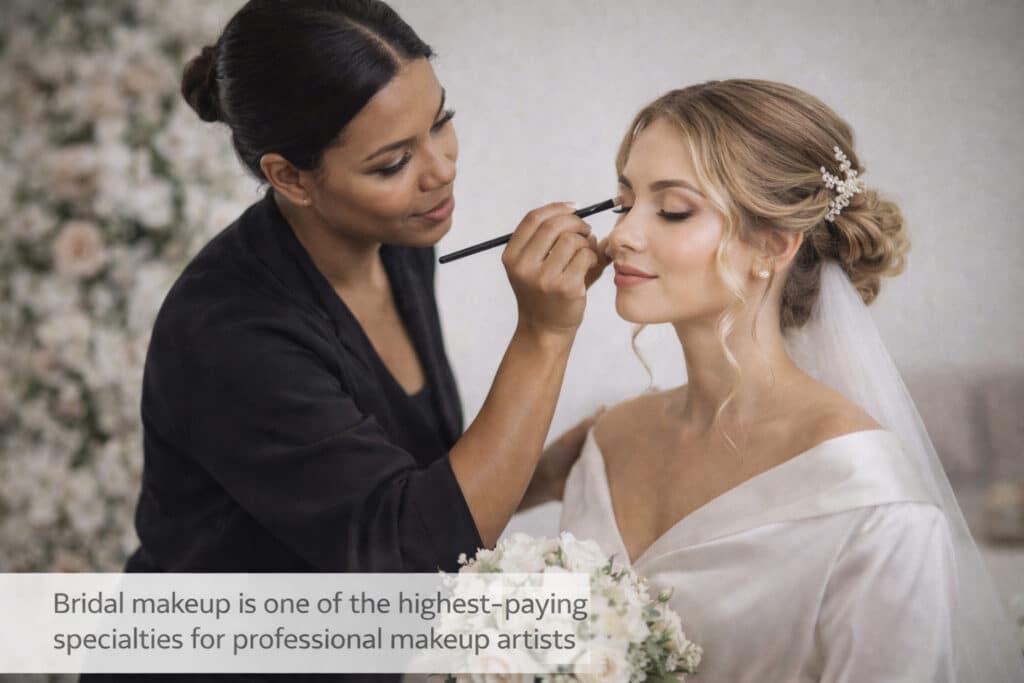
Bridal and Weddings: You are managing high-stress timelines and emotional clients. You aren’t just an artist; you are a service provider and a calming presence.
Salon or Spa positions: You focus on high-volume, consistent applications and product upselling.
Cosmetic counters (Sephora, Ulta, MAC): Your primary role is sales and brand education, with makeup application as a tool to close the sale.
Film, TV, and theater productions: You are working under intense lighting, matching continuity over weeks of filming, and often collaborating with hair and costume departments.
Fashion shoots and corporate events: You are creating a specific “look” for a brand, often requiring high speed and the ability to take direction from creative directors.
Social media content creation: You are your own producer, editor, and lighting technician, monetizing through brand deals and affiliate marketing.
Specialized work—such as special effects (SFX) (wounds, prosthetics), medical camouflage for scars, or high-fashion transformations—commands premium rates. Landing work on a major streaming production or serving high-end clientele in major cities can dramatically increase your day rate because of the technical expertise required.
Starting Salary: How Much Does a New Makeup Artist Earn?
First-year makeup artist earnings tend to be modest. You’re building a portfolio, collecting reviews, and developing a client base from scratch. This is the “hustle” phase where many artists take unpaid “test shoots” to get high-quality images.
Realistic 2026 Starting Figures (U.S.):
| Role Type | Starting Range |
|---|---|
| Salon/Counter Positions | $20,000 – $30,000/year |
| Entry Freelance | $20 – $30 per hour |
| Bridal (New) | $85 – $150 per face |
Example: A new bridal MUA in a mid-sized city charging $100 per face and booking 4 weekend clients can earn roughly $20,000 in event income while working part-time elsewhere. Most artists see noticeable income growth in years 2–3 as skills improve, referrals increase, and the cost of their kit is eventually paid off.
How Location and Cost of Living Change Your Salary
In the makeup world, location is almost as important as skill.
| State | Average Salary (Approx.) | Why? |
|---|---|---|
| California | $93,371 | Entertainment industry and luxury weddings |
| Washington | $72,800 | High demand for tech-sector corporate events |
| New York | $65,742 | Fashion capital and high volume of editorial work |
| Ohio | $24 – $26 per hour | Lower cost of living and lower service rates |
| Florida | $44,564 | Massive bridal market in Miami and Orlando |
| Texas | $45,084 | Rapidly growing bridal and corporate markets |
Artists in major cities charge 30–50% more per service but face higher living costs. Mid-sized markets like Austin, Denver, or Charlotte offer a balance of solid rates and manageable living costs.
Income by Employment Type: Employee vs. Freelance vs. Owner
Working as an Employee (Salon, Spa, or Counter)
Pros: Stable pay, health insurance, paid time off.
Pay: Typically $35,000–$50,000. Promotion to lead artist can raise this to $60,000+.
Best for: Beginners who want to learn on someone else’s dime or artists who value a work-life balance.
Freelance or Self-Employed Makeup Artist
Pros: High daily earnings, flexible schedule, creative control.
Rates: Established artists charge $150–$350 per face; celebrity artists charge $500–$1,000+.
The Hidden Costs: You must cover your own taxes, health insurance, and kit restocking ($1,000–$3,000/year). Most freelancers net about 60–70% of their gross revenue.
Business Owner (Studio, Agency, or Education)
Owning a studio or agency creates “leverage.” Instead of only making money when you are holding a brush, you make money when your team is holding brushes.
Studios/Agencies: Can gross $150,000–$300,000+, with owners taking home $70,000–$150,000 after paying their artists and rent.
Educators: Selling online courses or hosting masterclasses is the highest-profit model in 2026. A successful masterclass with 20 students at $300 each can generate $6,000 in a single day.
How to Increase Your Makeup Artist Salary
If you find your income plateauing, use these four levers to break through to the next level:
Specialize: A generalist charges $150. A “Bridal Airbrush Specialist” charges $350. By narrowing your focus, you increase your perceived value.
Raise Prices Strategically: Increase rates 10% every 6–12 months once you are 80% booked. If people stop complaining about your prices, you aren’t charging enough.
Diversify Income: Adding $25 lash applications on 10 weekly clients creates $10,000+ in annual revenue. Consider adding retail sales, brow laminations, or private lessons to your service menu.
Invest in Education: The industry moves fast. Advanced training, such as Vizio Makeup Academy’s Elite Makeup Course, helps you move from beginner-level work to high-paying professional contracts faster by teaching you the technical and business skills that school usually misses. To make high-quality training accessible, many programs now offer flexible payment plans.
The “Kit Tax”: Understanding Your Expenses
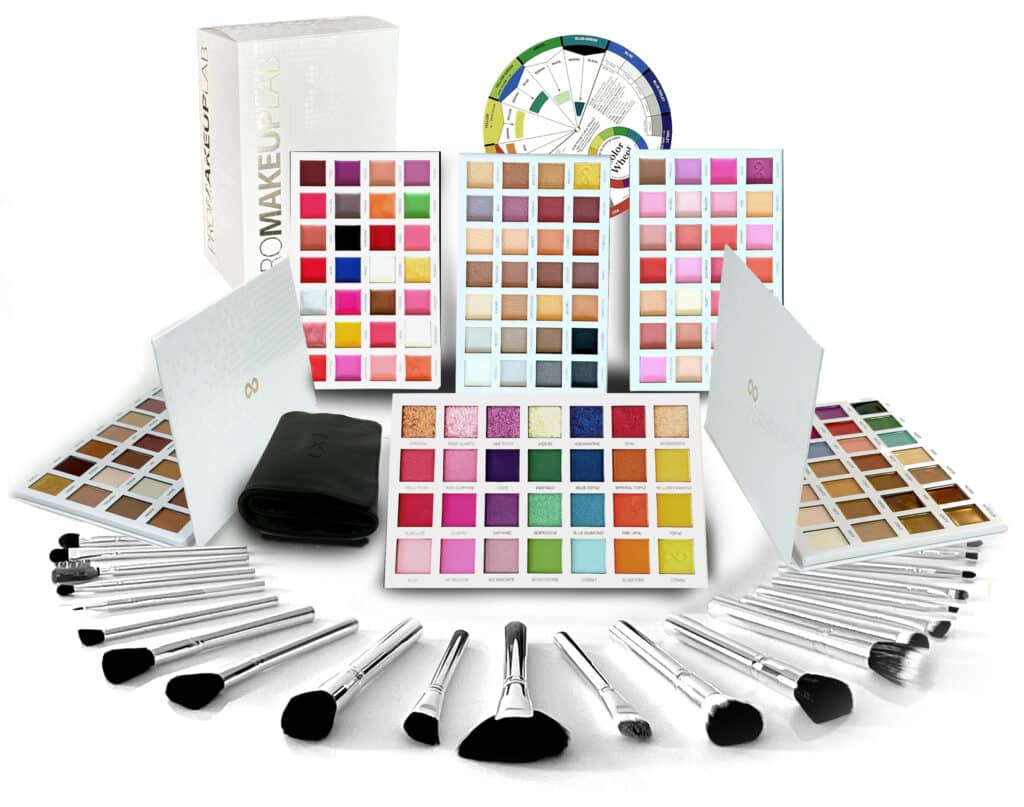
To understand what you really make, you have to look at what you spend. A professional makeup kit is an ongoing investment.
Initial Kit: $1,500 – $5,000.
Restocking Disposables: $50 – $100 per month.
Insurance: $200 – $500 per year (Essential for freelance MUAs).
Marketing/Website: $500 – $2,000 per year.
Continuing Education: $500 – $2,000 per year.
Successful artists treat their kit like a business asset, tracking every sponge and lipstick for tax deductions.
FAQ: Makeup Artist Salary
Can you make a full-time living as a freelance makeup artist?
Yes. Many freelance makeup artists earn $50,000–$90,000+ once established. However, building consistent bookings usually takes 1–3 years. Success depends on strong marketing, client reviews, and professionalism just as much as makeup skill.
Do I need a license to earn a good salary?
Requirements vary by state. Some locations require cosmetology or esthetician licenses for salon work, but freelance and bridal clients often care more about your portfolio, reliability, and results. A professional makeup artist certification can often have a bigger impact on your income potential.
How many clients do I need to earn $60,000 a year?
At $200 per appointment, you would need about 300 bookings per year, which is roughly 6 clients per week. However, by offering higher-value services like bridal packages at $800, you could reach the same income with only about 75 clients per year.
Is it possible to make six figures without moving to New York or Los Angeles?
Yes. Many successful makeup artists build strong businesses in smaller markets. By becoming known as the go-to artist in your area or specializing in high-end bridal or studio services, you can achieve premium pricing without the high cost of living in major cities.
